How to Turn Baron and Dragon Fights into Profitable Live Bets in LoL
Epic objectives in LoL are the primary catalyst for thrilling comebacks and swift map finishes. We explore how to predict Soul Point fights, avoid Baron traps, and profit from live betting.
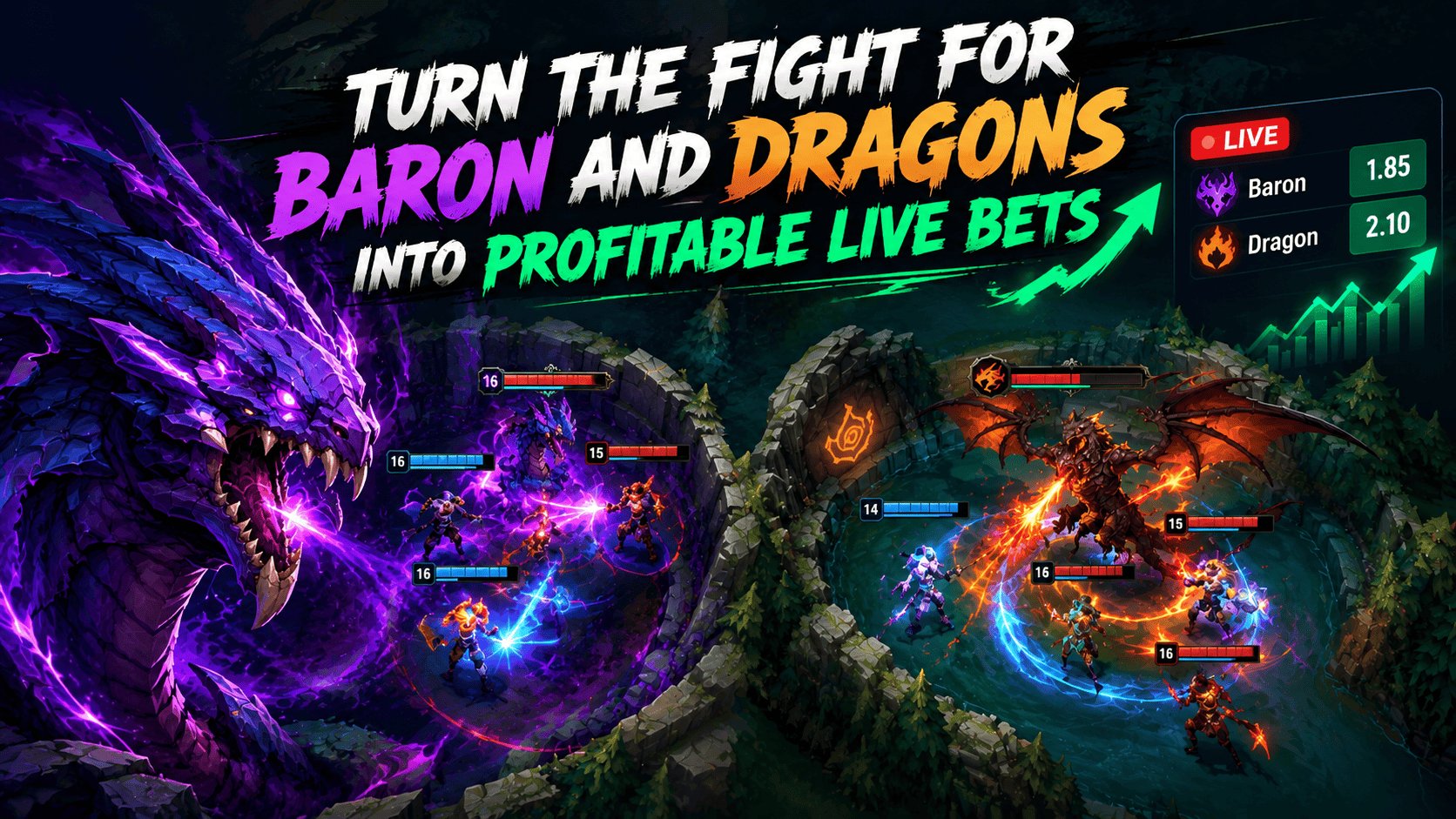
In professional League of Legends, Nashor and Dragons are not just static monsters in Summoner's Rift, but fundamental levers controlling game tempo and key catalysts for dramatic comebacks. For a bettor, live event moments revolving around these major objectives offer the highest odds packed with immense betting value.
The primary vulnerability of sportsbook analysts and automated live algorithms lies in their inertia. In 80% of cases, live odds react immediately to raw gold lead or tower counts, but completely overlook the actual state of the map, team drafts, vision control, and key ability cooldowns.
If you learn to read the setup around an objective pit 30–60 seconds before first blood is spilled on screen, you can consistently outpace the bookmaker and secure peak odds on kill totals, map duration, and sensational match reversals.
Use Ensitics.io as your pre-match checklist — try for free → ensitics.io
Reading Timings That Crush the Odds
Standard elemental drakes (Ocean, Chemtech, Hextech, Infernal, Mountain) grant stacking buffs that gradually boost champion stats. However, the fundamental triggers for the live betting market are just two events: securing the Dragon Soul and the arrival of the Elder Dragon.
The Battle for the 4th Drake (Soul Point):
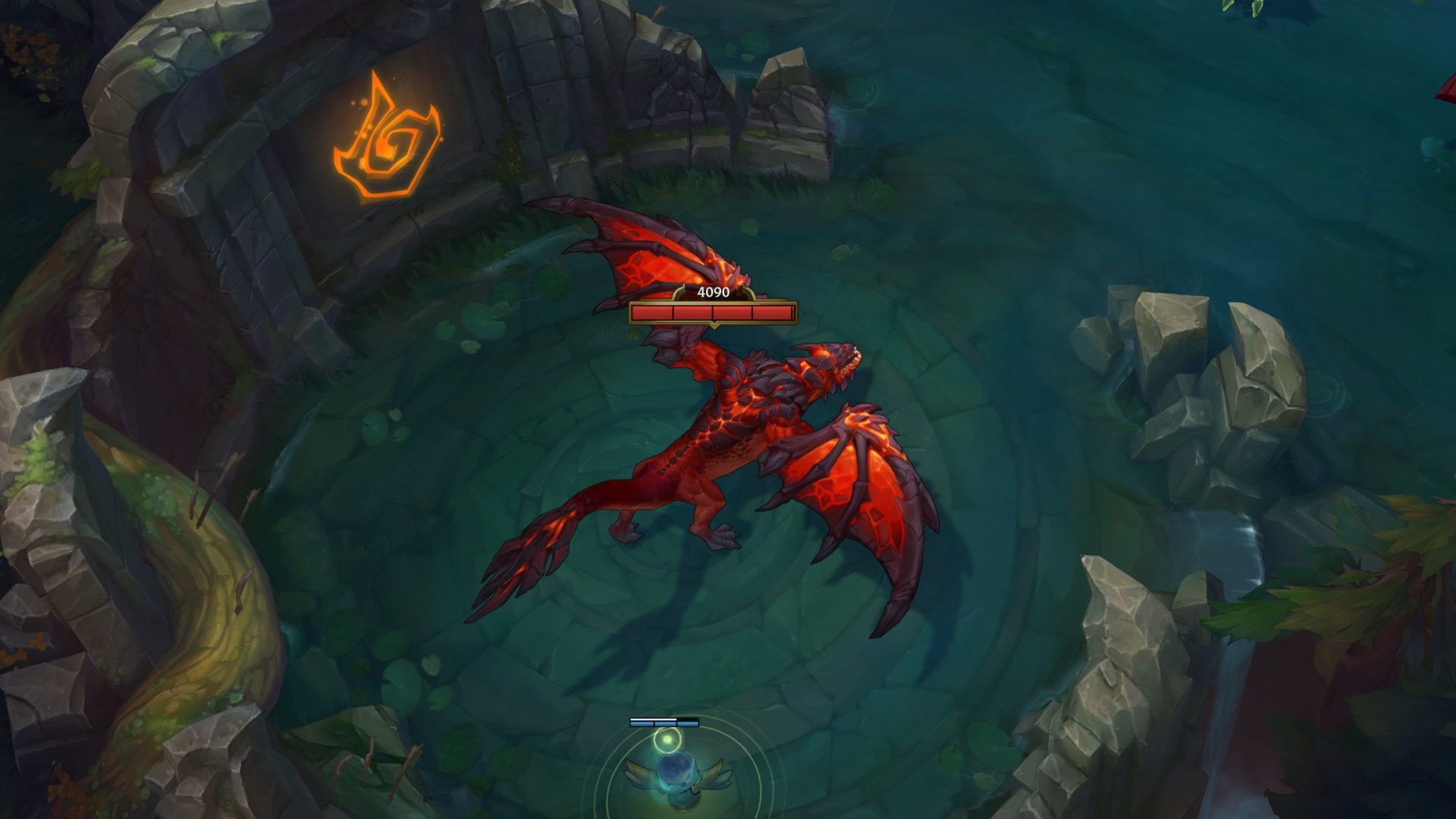
When one team pushes the dragon count to 3:0 or 3:1, the next spawn turns into a point of absolute risk. The team trailing in objectives is obligated to force a fight, even if they are down 3,000 to 5,000 gold. Playing passively at this point is equivalent to a slow surrender.
Live Betting Signal: The moment a team commits to the 4th dragon is the premier window to bet on Total Kills Over in a specific time frame or across the entire map. If both rosters feature champions with area-of-effect crowd control and AoE damage (teamfight comps), a river dragon clash is guaranteed to result in kill trades and erupt into a bloodbath.
The Magic and Terror of the Elder Dragon Buff:
The Elder buff is the most potent effect in League of Legends. It burns with true damage and instantly executes any target whose health drops below 20%. The team securing the Elder Dragon closes out the game in 90% of cases within the next two minutes, wiping away any previous gold deficit.
Live Betting Signal: If a trailing underdog steals or wins the teamfight for Elder, immediately take their Map Winner bet. Sportsbook algorithms frequently lag by 15–30 seconds when adjusting odds, continuing to treat the team with destroyed inhibitors as the favorite.
Risky Nashor: Anatomy of a Comeback and Pit Traps
Baron Nashor is the game's trickiest epic objective. Damaging Nashor applies a debuff: the Baron strips armor and magic resistance from attackers, turning favorites into fragile, vulnerable targets for a sudden counter-engage.
Sneaky Baron at Minute 20:
Baron's immediate spawn at the 20-minute mark often catches teams off guard. If a draft includes champions with massive single-target DPS (Jinx, Cassiopeia, Master Yi, Nunu, Kalista), they can melt Nashor in 10–15 seconds with minimal map control.
Live Betting Signal: A successful early Baron empowers minion waves, enabling the team to crack open 2–3 outer turrets instantly. This serves as a clear inflection point to bet on Map Duration Under, as the match tempo doubles.
Baron Bait / Coin-flip:
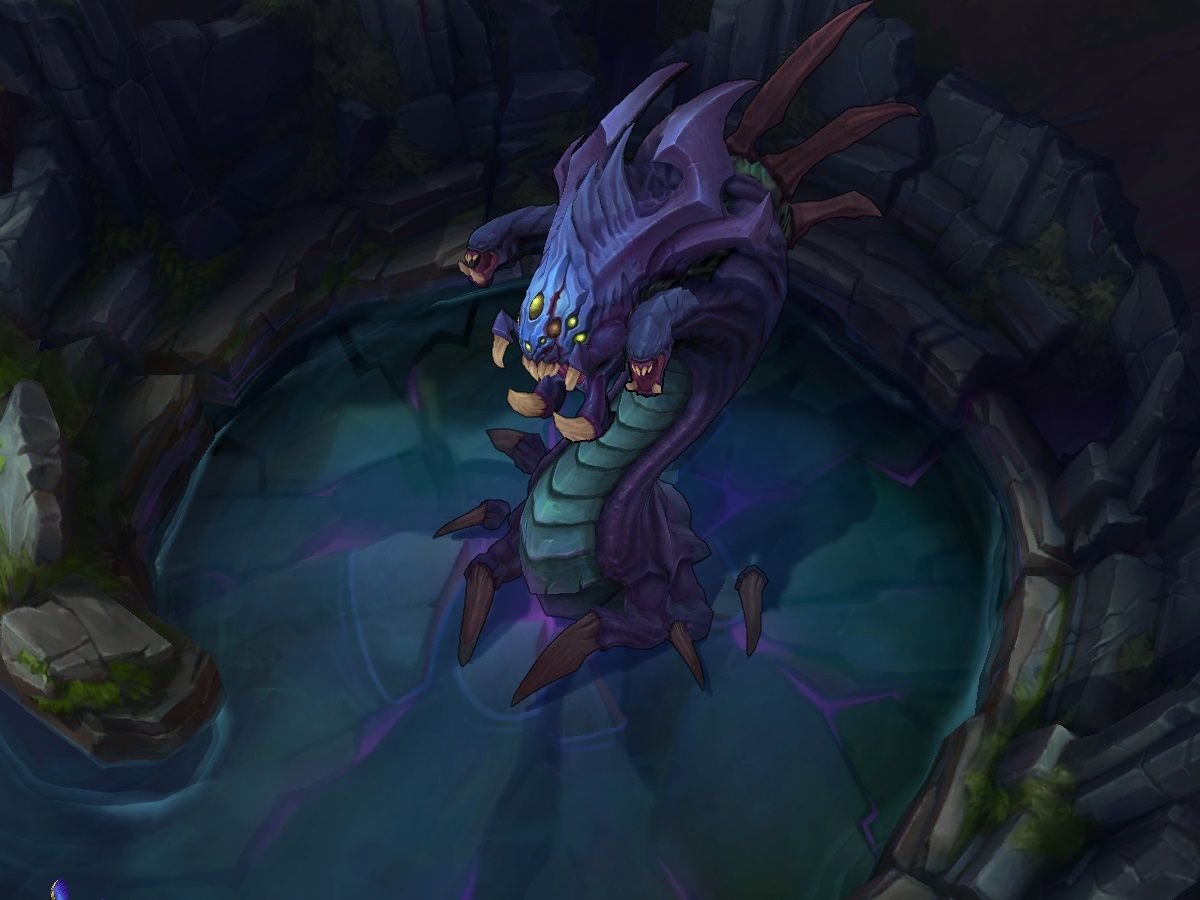
When a leading team hits a brick wall against a turtling opponent and cannot safely siege inhibitors, they begin hitting Baron to lure the enemy out from behind their walls. However, if the trailing side has a mobile jungler alive (Lee Sin, Vi, Viego, Gragas), taking Nashor becomes a dangerous 50/50 Smite coin-flip.
Live Betting Signal: A favorite starting Baron without total vision denial in the fog of war while the opposing jungler is alive represents an ideal window to bet on a comeback and an Underdog Map Win. A single successful Baron steal by the trailing team completely shatters the favorite's economic edge.
Bettor's Secret Checklist: What to Watch 30 Seconds Before the Fight
Wave Management & Minion Priority:
Never bet on a team entering an objective pit when lanes are pushed deep into their own base. Even if they win the teamfight at Baron or Dragon pit, they cannot convert the advantage because they must recall immediately to defend against super minions.
Jungler Summoner Spells (Flash & Smite Availability):
A precursor to a successful steal is having both Flash and Smite ready on the trailing team's jungler when the favorites lack targeted hard CC (stuns/suppressions). This boosts the steal probability up to 40–50%.
River Chokepoints:
The terrain around the Baron and Dragon pits consists of narrow corridors. Compositions equipped with heavy AoE damage and zoning tools (Rumble, Ornn, Viktor, Miss Fortune, Jarvan IV, Azir) can wipe enemies off the map inside a choke, even while trailing by 5,000–7,000 gold.
Vision Denial & Fog of War:
A squad that clears all enemy wards 1 minute before spawn using Control Wards and Oracle Lenses gains a tremendous psychological advantage. An opponent walking face-first into a dark river choke blunders and loses a champion first in 75% of instances.
Conclusion
Successful live betting in League of Legends requires moving past blind reliance on raw gold lead graphs. Event moments around Baron and Dragons represent a complex tactical and psychological game where timings, vision control, and draft composition take center stage. By learning to assess team positioning around the pit half a minute before the clash initiates, you can consistently outmaneuver sportsbook algorithms and lock in maximum value.
Read also: The Psychology of Tilt: How CS2 Pro Emotions Ruin Bulletproof Accumulators and Predictions; Bankroll Management in Esports: How to Avoid Busting Out in CS2, LoL, and Overwatch 2; Artificial Intelligence vs Expert Opinion: Will Neural Networks Completely Replace Esports Analysts?
FAQ
What is "322" in esports?
"322" is slang for a fixed match. The term originated from an infamous incident in Dota 2 where a player bet against his own team to win $322.
How can you tell if a match might be fixed?
A single red flag is rarely enough. Usually, you should look at multiple factors simultaneously: tournament tier, team reputations, sudden odds fluctuations, suspicious in-game plays, and tournament organizer transparency.
Do match-fixing incidents occur at Tier 1 tournaments?
Yes, the possibility cannot be ruled out completely. However, at premier international events, the likelihood of 322 is far lower due to lucrative player salaries, high reputational stakes, and heavy scrutiny from organizers, audiences, and sportsbooks.
Why do bookmakers shift odds?
Most often, line movements are driven by roster news, injuries, changes in team form, or heavy betting volume on a specific outcome. However, sharp line swings without any apparent justification can be a sign of a suspicious match.
What is spot-fixing?
Spot-fixing refers to manipulating a specific in-game event rather than the final outcome of the entire match. Examples include conceding First Blood in Dota 2 or intentionally throwing the opening pistol round in CS2.
Is it worth betting on lower-tier, obscure tournaments?
If you are a beginner, it is better to focus on major international championships. On obscure online events, reliable information on rosters and organizers is scarce, and the risk of encountering suspicious matches is objectively higher.

Agent Synergy in Valorant: Why a Pick Without a Duelist or Initiator Is Doomed to Fail
Agent selection in Valorant often decides the outcome before the first round. We analyze why lacking a Duelist costs space, a pick without an Initiator blinds the team, and how this impacts every map.
MR12 Economy in CS 2: How the Format Change Shifted the Value of Pistol Rounds and Force-Buys for Totals Betting
CS2's transition to MR12 increased the value of each round by 20%. Discover why pistol wins trigger Unders and how second-round force-buys drive Overs.
Social Media Leaks and Rumors: How to Filter Information Noise Before Key Matches
In the social media era, a rumor about a roster change, a key player's illness, or team conflict can collapse the odds for a major match in minutes. Yet 80% of such 'leaks' turn out to be fake news or manipulation. We examine how to filter information noise, verify sources, and rely solely on facts before crucial matches.