MR12 Economy in CS 2: How the Format Change Shifted the Value of Pistol Rounds and Force-Buys for Totals Betting
CS2's transition to MR12 increased the value of each round by 20%. Discover why pistol wins trigger Unders and how second-round force-buys drive Overs.
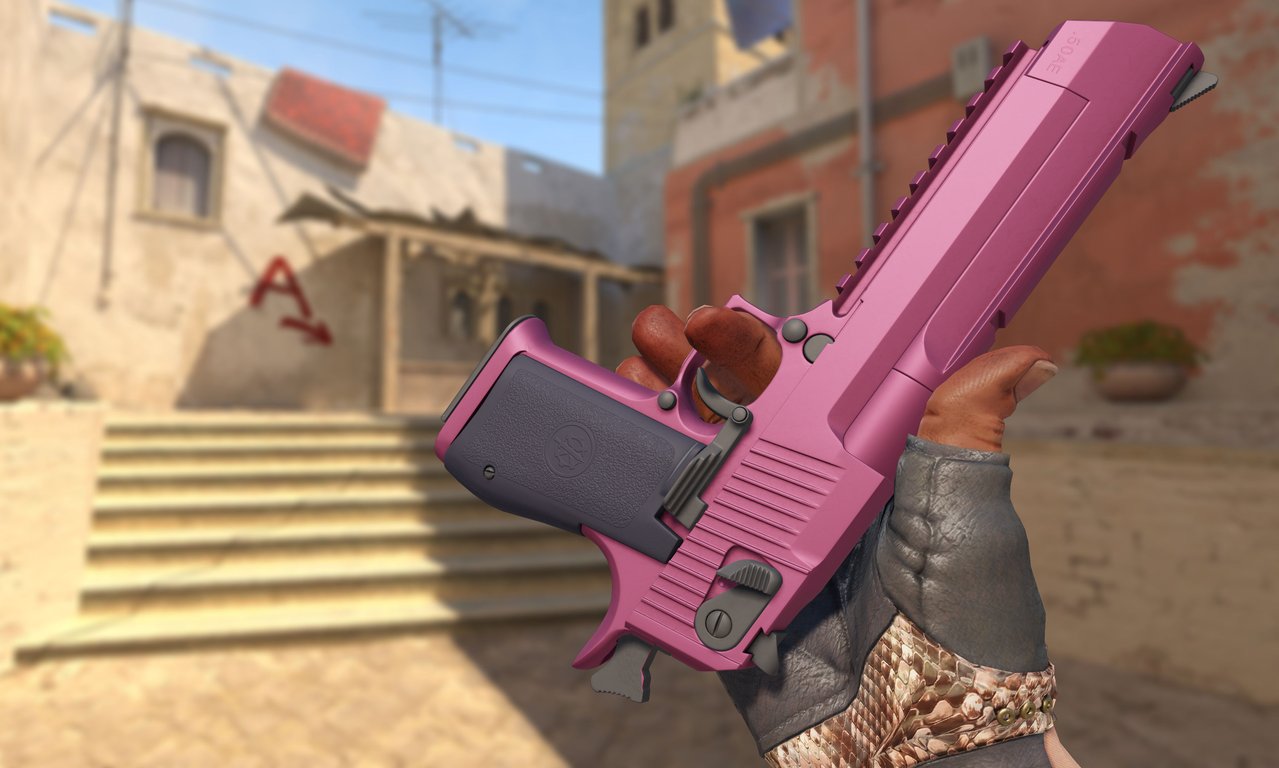
Counter-Strike 2's transition to the MR12 system (12 rounds per half, win at 13) instead of CS:GO's traditional MR15 (15 rounds, win at 16) fundamentally changed the pace of the game. Bettors' attention instantly shifted from the total number of rounds to economic patterns, as the cost of every mistake increased by exactly $20\%$.
The main economic paradox of CS 2 is that Valve shortened the match length but did not revise the baseline economy formula (round rewards and loss bonus scales remained the same). As a result, pistol rounds and force-buys gained an avalanche-like impact on totals odds (Over / Under).
1. The "Three-Round Rule": Why Pistol Rounds Became the Main Trigger for Under (Total Under)
In MR15, losing a pistol round was an unfortunate setback easily compensated for by the longer distance. In MR12, winning a pistol round generates up to 25% of all rounds needed to win a half (3 out of 12).
The Economic Snowball
Standard scenario following a won pistol round:
Round 1 (Pistol round): Win $\rightarrow$ +$3250–$3500 to each player.
Round 2 (Anti-eco): Win against unarmored enemy pistols with a probability of $>85\%$.
Round 3 (Bonus round / Smooth conversion): The winners have a full buy with primary weapons or armor and SMGs/shotguns; the losers are only just entering their first full buy.
Impact on totals betting:
If a team secures both pistol rounds in a match, they effectively start with an advantage of $+4$ or $+6$ "easy" rounds.
In such a match, the probability of hitting Total Under (Under 21.5 / Under 20.5) increases by $35–40\%$, as the losing side simply lacks the half-distance required for a comeback.
2. Aggressive Force-Buys: The Engine of Unpredictability and Total Over
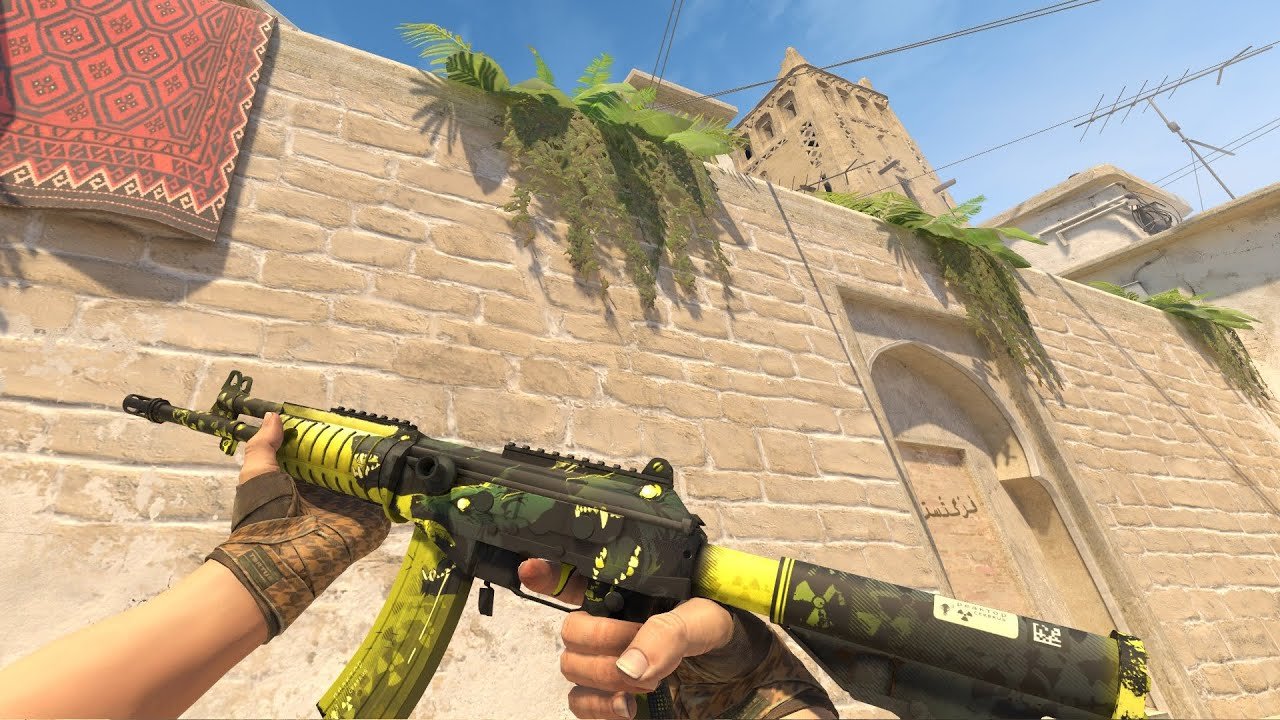
In CS:GO, teams could afford a "clean eco" (full save) after losing the pistol round to build up funds for a rock-solid buy in round 3. In MR12, conceding 2 rounds without a fight is simply too costly.
The Second-Round Phenomenon
Today, teams opt for a second-round force-buy far more frequently (Armor + Deagle/Galil/Tec-9/MP9).
Scenario 1: Risk Aversion (Classic Eco Round)
If a team loses the pistol round and decides to save completely (full save), they make minimal purchases or play without armor. In this case, the second round is surrendered to the opponent with a probability above $85\%$. The score immediately becomes 0:2, and the losers get their first full gun buy only by round 3. For totals betting, this is a direct signal pointing toward a lower round count on the map (high likelihood of hitting the Under).
Scenario 2: Aggressive Force-Buy
If a team takes the gamble and buys armor and upgraded pistols/weapons in round 2 (Deagle, Tec-9, MP9, Galil), the match splits into two paths:
Force-buy fails: The team completely wrecks its economy, concedes round 3 without a fight (0:3), and risks falling into a deep deficit. This drastically speeds up the game, pointing toward the Under.
Force-buy succeeds: The losing side breaks the opponent's economy, throwing them into a financial crisis. A series of trades with incomplete buys ensues, the game spirals into chaos, and the scoreline of the first half evens out. This serves as an ideal catalyst for a prolonged map and hitting the Over.
Use Ensitics.io as your pre-match checklist — try it for free → ensitics.io
How force-buys disrupt the totals market:
A successful force-buy breaks the opponent's economy. If Team B wins the pistol round but drops the force-buy in round 2, Team A seizes momentum while Team B is forced onto an eco.
Economic Reset Loop. Situations where teams trade force-buys turn the half into a seesaw battle ending 6:6 or 7:5. This is an ideal scenario for cashing Total Over (Over 21.5 / Over 22.5) and overtime.
3. Practical Checklist for Totals Betting in CS 2
To identify value odds in bookmaker lines (both pre-match and in-play), consider three key factors:
Team Pistol Round Profile (Pistol Win Rate)
In MR12, analytics give a massive edge to teams boasting high pistol win rates (e.g., NAVI, FaZe, Vitality).
Pre-match strategy: When a favorite with a $65\%+$ pistol win rate meets an underdog weak in opening rounds, the total round line is often overpriced. Taking Under (20.5 / 21.5) offers great value.
Risk Tolerance in Round 2 (Force-Buy Heavy Teams)
Certain teams (such as Heroic or Spirit) are notorious for hyper-aggressive economic moves after losing the pistol round.
Live strategy: If a team loses the pistol round but you know there is an $80\%$ chance they buy Armor + Pistols in round 2, don't rush to bet Under. A successful force converts immediately into a longer map and pushes rounds to the Over.
Map Pool Impact
The MR12 economy feels noticeably different depending on map layout:
CT-sided maps (Anubis, Ancient, Nuke): Defense requires more capital (M4A1-S/M4A4 cost more than AK-47, plus $400 defuse kits). A CT pistol loss often triggers 0:3 or 0:4 runs, rapidly driving the map towards an Under.
T-sided maps: Terrorists earn +$800 for planting the bomb even if they lose the round. This lets them buy by round 3 (or even round 2), sustaining a tightly contested scoreline (Over).
Conclusion
The MR12 format transformed CS 2 into a math problem with fewer variables. Betting on total rounds no longer tolerates the inertial analysis of the CS:GO era:
Pistol rounds now correlate directly with Under bets.
Successful force-buys are the primary catalyst for pushing rounds Over.
For profitable betting, track more than just overall form: monitor team Win Rates in rounds 1–3 and their conversion rate following lost pistol rounds.
Also read: Tilt Psychology: How CS2 Esports Players' Emotions Ruin Safe Parlays and Predictions; Bankroll Management in Esports: How Not to Lose Everything in CS2, LoL, and Overwatch 2 Tournaments; Artificial Intelligence vs. Expert Opinion: Can Neural Networks Fully Replace Esports Analysts?
FAQ
What is 322 in esports?
322 is slang for a fixed match. The term originated from an infamous Dota 2 incident where a player bet against his own team to win $322.
How can you tell if a match might be fixed?
A single sign is rarely enough. Usually, you should evaluate several factors at once: tournament tier, team reputations, sudden odds movements, suspicious in-game moments, and organizer transparency.
Do match-fixing incidents occur at Tier 1 tournaments?
Yes, the possibility cannot be ruled out entirely. However, at premier international events, the likelihood of 322 is significantly lower due to high player salaries, reputational stakes, and heavy scrutiny from organizers, spectators, and bookmakers.
Why do bookmakers shift odds?
Most often, line shifts stem from roster updates, injuries, changes in team form, or heavy betting volume on a specific outcome. However, sharp line movements without an apparent cause can signal a suspicious match.
What is spot-fixing?
Spot-fixing is an attempt to manipulate a specific in-game event rather than the overall match outcome. For example, conceding First Blood in Dota 2 or intentionally throwing the opening pistol round in CS2.
Is it worth betting on obscure tournaments?
If you are a beginner, it is better to stick to major international tournaments. In low-tier online events, reliable information about teams and organizers is scarce, and the risk of encountering fixed matches is objectively higher.

Social Media Leaks and Rumors: How to Filter Information Noise Before Key Matches
In the social media era, a rumor about a roster change, a key player's illness, or team conflict can collapse the odds for a major match in minutes. Yet 80% of such 'leaks' turn out to be fake news or manipulation. We examine how to filter information noise, verify sources, and rely solely on facts before crucial matches.
Tier-2 Esports Scene: Where to Find Hidden Value Bets and Why Favorites Often Lose to Underdogs
The Tier-2 esports scene is a world of chaos, information deficit, and unexpected upsets. While bookmaker algorithms rely on raw stats, favorites regularly lose due to motivation issues, ping, and unrevealed opponent map pools. We break down how to find hidden value and what to look for when analyzing semi-pro matches.
Anatomy of a Comeback: What Legendary Moments in CS2, Dota 2, LoL, and Valorant Have in Common
A comeback in esports is neither an accident nor magic. It is a precise algorithm combining an opponent's economic collapse, tactical adaptation, resource caps, and mental exhaustion. We break down the anatomy of the greatest comebacks in CS2, Dota 2, LoL, and Valorant.