5 Signs of a Promising Underdog in CS2, LoL, and MLBB
An underdog is not always a weak team. Sometimes high odds conceal true strength. We analyze five signs of promising underdogs in CS2, LoL, and MLBB before the match.

When it comes to esports predictions, the most obvious choice isn't always the most profitable one. A favorite may boast a stronger roster, a higher ranking, and a winning streak, but that doesn't necessarily mean their opponent cannot keep up.
Interesting opportunities frequently arise precisely when the market overestimates one of the teams too heavily.
In CS2, League of Legends, and Mobile Legends: Bang Bang, there are several indicators that help distinguish an ordinary outsider from an underdog capable of a genuine upset. You don't need to blindly chase long shots.
It is often enough to take a closer look at recent matches, playstyles, and the specific matchup dynamics.
We analyze five signals indicating that an underdog is worth a closer look.
1. The Underdog Shows Good Form Despite Match Results
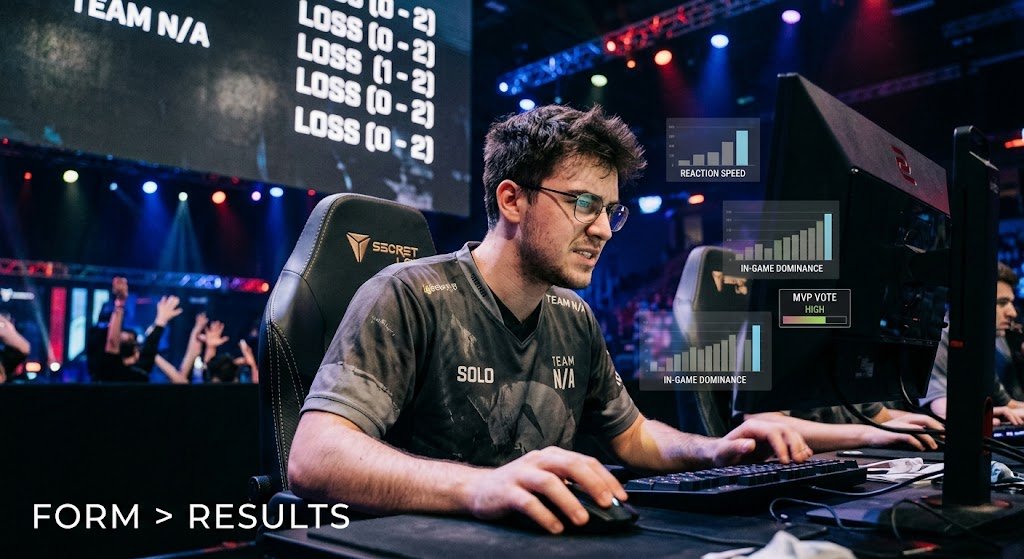
The first thing analysts usually look at is recent match history. However, simply counting wins and losses can be misleading.
A team might lose four matches in a row while pushing tournament favorites to the limit in extremely close games. On paper, this looks like poor form, even though the team's gameplay quality remains at a high level.
In CS2, it is worth paying attention to round differentials, the number of close maps, and results against top-tier opponents. An 11:13 defeat looks entirely different from a 4:13 blowout, even if both go down as losses in the record books.
In LoL, it is useful to monitor how long a team kept the game competitive, how their economy developed, and how decisive team fights unfolded. If a team consistently builds an early-game lead but loses due to individual late-game errors, they shouldn't be written off prematurely.
In MLBB, early kills, objective control, and the ability to mount a comeback after a rough start play a similar diagnostic role.
Therefore, poor raw statistics alone do not make a team a bad underdog pick. Match results often fail to reflect the actual level of play.
2. Playstyle Matchups Favor the Underdog
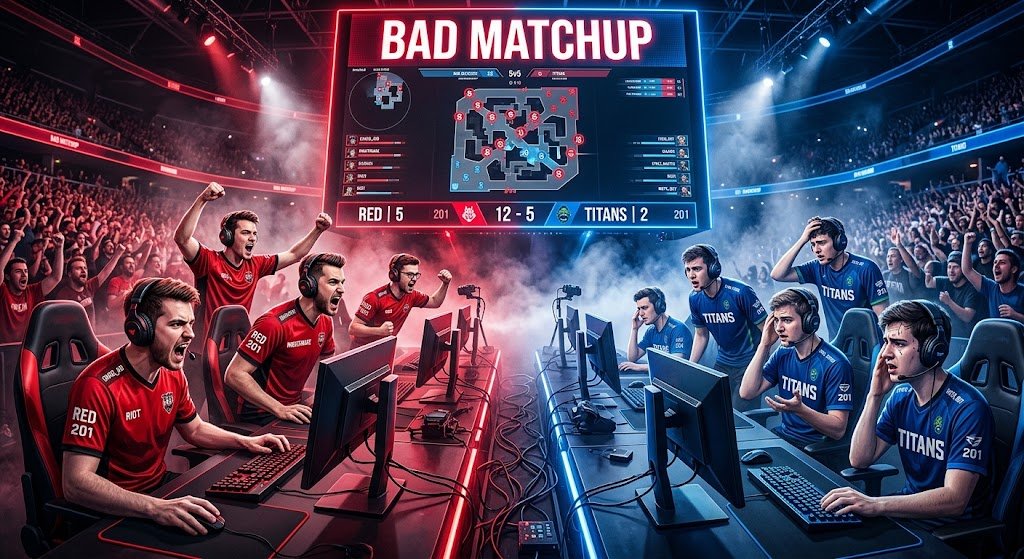
This is one of the most compelling factors in match analysis. A team's strength depends not only on its overall skill level, but also on how well its style matches up against a specific opponent.
A favorite might consistently dominate slow, methodical teams while struggling immensely against aggressive, fast-paced opponents. In such cases, high odds on the underdog become far more attractive than they seem at first glance.
In CS2, this is particularly evident on certain maps. A team can have an impressive overall map win rate yet still struggle against opponents who excel at specific choke points or utilize unconventional tactical setups.
In LoL, tempo is critical. If the favorite prefers scaling and prolonged matches while the underdog thrives in early skirmishes and builds advantages before core items are completed, the game can unfold quite differently from market expectations.
In MLBB, clashes of differing gameplay philosophies create similar dynamics. An aggressive squad with strong map control can force the favorite onto the back foot, preventing them from executing their standard game plan.
Before placing a bet, ask yourself one simple question: Does the favorite match up well against this specific opponent's playstyle?
If the answer is "No," the underdog's odds immediately gain value.
Use Ensitics.io as your pre-match checklist – try it free now → ensitics.io
3. The Underdog Holds an Advantage in Maps, Drafts, or Picks
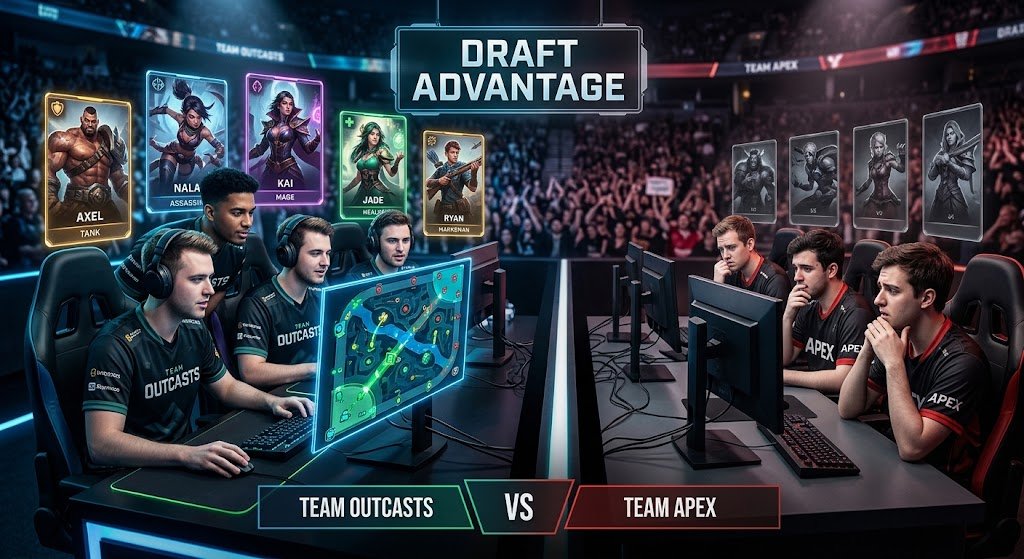
The match format can significantly shift the balance of power.
In CS2, knowing which maps will be played in a series is crucial. A team might rank lower overall but boast exceptional win rates on specific maps. If the format allows them to secure a comfort pick or steer the series toward maps the favorite dislikes, the skill gap narrows considerably.
In LoL and MLBB, drafting carries even greater weight. A capable coaching staff and a tailored game plan against a specific opponent can often bridge individual skill gaps.
Scenarios where the underdog has proven success with specific champion or hero compositions are particularly noteworthy. When a team secures its signature picks and forces the favorite out of their comfort zone, it can decisively swing the outcome.
Draft quality shouldn't be judged solely on individual meta tier lists, however. What matters most is how effectively the team executes their chosen composition.
4. The Favorite Looks Stronger Only on Paper

High ratings, star power, and long winning streaks can heavily distort match perceptions. Yet behind impressive surface numbers, you may find a team currently playing well below its peak.
The favorite might have recently changed a player, coach, or strategic system. They could also be experimenting with roles or treating the tournament as preparation for a higher-priority event.
In these cases, historical data is not always indicative of current performance levels.
Be especially cautious with favorites whose recent victories came primarily against lower-tier competition. A five-game win streak looks commanding, but loses its luster if most wins were secured against bottom-tier squads.
Meanwhile, the underdog might possess a less glamorous record while consistently testing high-caliber opposition.
Therefore, before making a prediction, distinguish between a team's reputation and its actual current form.
5. Odds Are Rising Without Objective Reasons
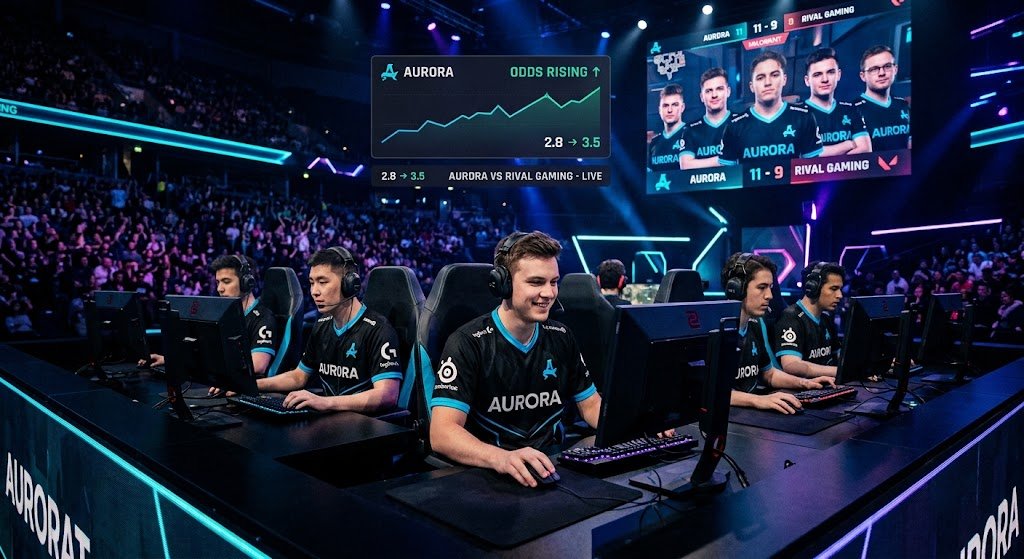
Line movement alone does not guarantee a successful wager, but it provides valuable market insight.
Suppose the market heavily backs the favorite before the match, causing the underdog's odds to drift upward. At first glance, this might look like confirmation of the underdog's inferiority.
However, if rosters remain intact, no critical news has emerged, and tactical and statistical indicators point to a closely matched series, a key question arises: Is the gap between the two teams truly that wide?
This is where the concept of Value Betting comes into play.
An underdog doesn't need to be favored to win. A bet is valuable whenever the true probability of an outcome exceeds the probability implied by the odds.
For instance, odds of 3.50 on an underdog imply a win probability of roughly 28.6% before bookmaker margin. If your analysis estimates their real chances at 35%, that betting line warrants serious attention.
That said, never draw conclusions based solely on odds shifts. Betting lines move for various reasons, and the market can react quickly to information you might not yet have.
How to Identify a Promising Underdog in CS2, LoL, and MLBB
There is no universal formula for spotting upsets, but running through a pre-match checklist helps surface key insights.
In CS2:
How close were the underdog's recent maps?
Which maps are being played in the series?
How familiar are the teams with each other's tendencies?
Does the favorite struggle against this specific playstyle?
Who looks sharper in current form, regardless of world rankings?
In LoL:
Which champion pools and drafts do the teams prioritize?
Who controls the early game more consistently?
How reliably does the favorite convert leads into wins?
Has the underdog prepared specific counter-strategies?
How do both teams perform against similarly tiered opponents?
In MLBB:
Which hero combinations does the underdog utilize most effectively?
How disciplined is the team's map control?
Who executes better around key neutral objectives?
Can the favorite handle aggressive early tempo?
How consistently do the teams execute their drafted win conditions?
The more of these factors tilt in favor of the underdog, the higher the value in their line.
When You Should Avoid Betting on the Underdog
High odds alone do not make a wager profitable. Often, the market assesses the gap between two teams accurately.
Exercise caution when an underdog is dealing with internal roster turbulence, has recently substituted a core player, or displays systemic instability across multiple areas of play.
Overvaluing a single upset victory against a top team is equally dangerous. One great match does not prove a squad has permanently leveled up.
Most importantly: never back an underdog merely because the payout is large. A solid underdog pick is not just a high number on a betting slip; it is a team backed by tangible, analytical reasons to outperform expectations.
Conclusion
Finding a promising underdog in CS2, LoL, and MLBB requires looking beyond surface-level rankings and match histories. Strong underlying form, stylistic advantages, map and draft edges, an overvalued favorite, and favorable market lines can completely alter a match's risk-reward profile.
None of these factors guarantee an outright win. Their primary function is to identify where the market may have mispriced a team's true chances.
This analytical mindset allows you to move away from guesswork and build reasoned, value-driven esports predictions.
Read also: The Psychology of Tilt: How Esports Player Emotions in CS2 Ruin Safe Parlays and Predictions; Bankroll Management in Esports: How to Avoid Busts in CS2, LoL, and Overwatch 2 Tournaments; Artificial Intelligence vs. Human Expert: Can Neural Networks Fully Replace Esports Analysts?
FAQ
What does 322 mean in esports?
"322" is an esports slang term for match-fixing. It originated in Dota 2 after a professional player bet against his own team to win $322.
How can you tell if a match might be fixed?
No single factor is definitive. Analysts generally evaluate multiple concurrent indicators: tournament tier, team reputations, anomalous odds movements, suspicious in-game decisions, and organizer transparency.
Do fixed matches occur in Tier-1 tournaments?
While impossible to rule out entirely, the probability of match-fixing in Tier-1 events is minimal due to high player salaries, severe reputational risks, and intense scrutiny from organizers, viewers, and integrity watchdogs.
Why do bookmakers adjust their odds?
Odds movements are primarily driven by roster changes, injuries, tactical news, team momentum, or significant betting volume on one side. However, sudden shifts without clear news can occasionally indicate an integrity concern.
What is spot-fixing?
Spot-fixing refers to manipulating specific micro-events within a match rather than the overall outcome—such as deliberately conceding First Blood in Dota 2 or throwing the opening pistol round in CS2.
Is it worth betting on lower-tier tournaments?
Beginners should stick to major international tournaments. Obscure online events lack reliable verified data, have limited coverage, and present higher integrity risks.

What Betting Markets Are Available in Dota 2 Besides Match and Map Winner?
In short, besides match and map wins in Dota 2, you can bet on handicaps, totals, correct series score, first blood, next kill, total kills, first Roshan, tower count, map duration, player stats, and tournament winners.
Tilt Psychology: How Esports Players' Emotions in CS2 Ruin Ironclad Expresses and Predictions
Esports seems like a realm of pure math and numbers. However, as long as real people sit behind the monitors, tilt remains the main hidden risk factor. We break down the chain reaction of emotional breakdowns, the first map syndrome, and how to read team mental states in real time.
How to Identify a Suspicious Match and Avoid Match-Fixing (or 322)
It is impossible to completely eliminate the risk of encountering a fixed match. However, understanding how to spot 322 and what to look out for will significantly lower your chances of making a mistake.