How to Identify a Suspicious Match and Avoid Match-Fixing (or 322)
It is impossible to completely eliminate the risk of encountering a fixed match. However, understanding how to spot 322 and what to look out for will significantly lower your chances of making a mistake.
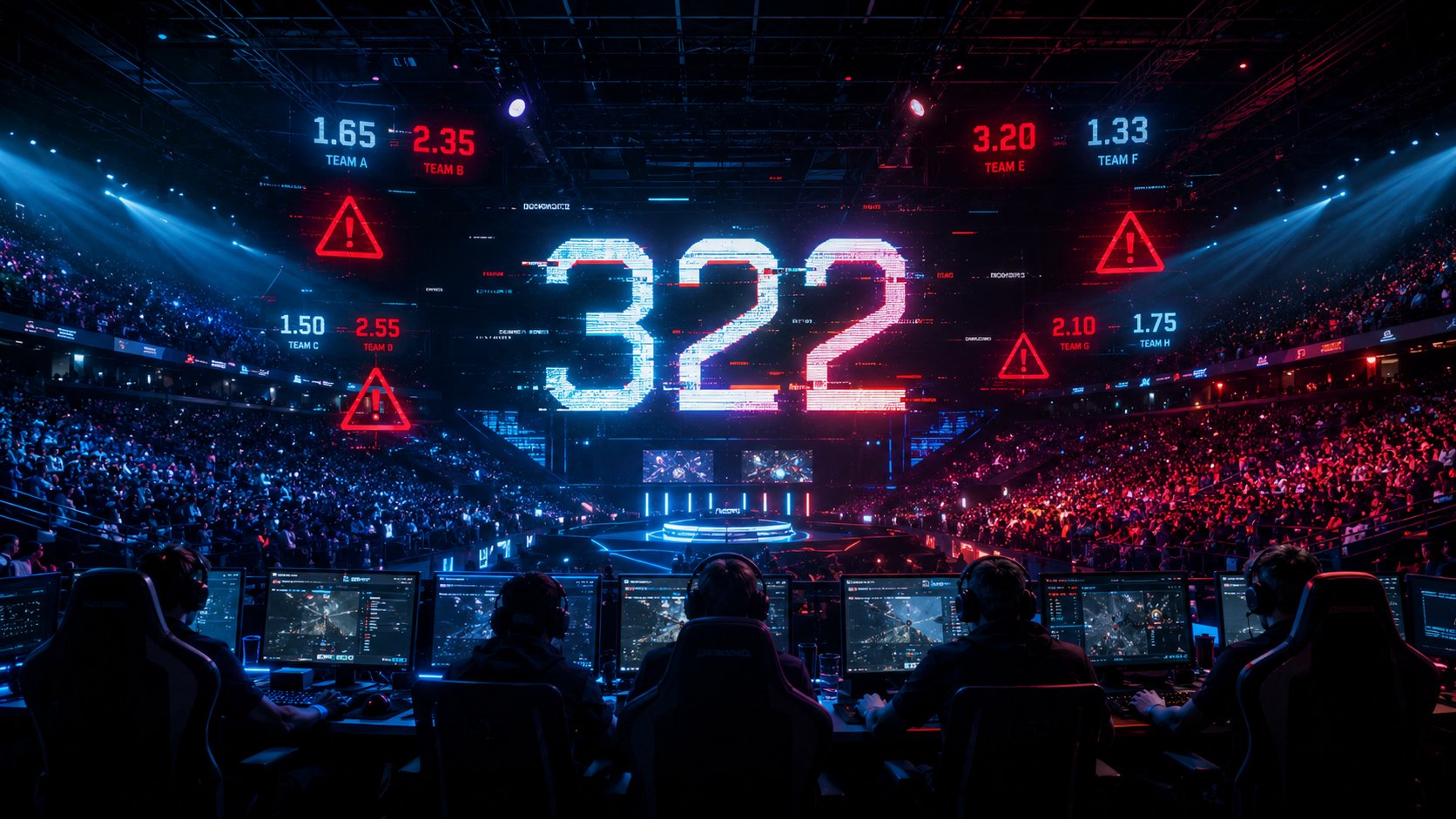
If you are just starting to follow esports or place bets, sooner or later you will come across the term "322". Questions like "what is 322", "how to identify 322", or "how to tell if a match is fixed" regularly appear online. This is not surprising: there are many rumors surrounding match-fixing, and many people immediately label any unexpected result as a "throw".
In reality, far from every strange match is fixed. Even the best teams in the world sometimes have bad series, and clear favorites can lose to underdogs. Therefore, if you want to understand how to recognize a fixed match in esports, it is important to look not just at a single moment, but at several signs at once.
What is 322 in Esports?

The term "322" originated back during the Dota 2 beta test. RoX.KIS player Alexey "Solo" Berezin bet $100 against his own team at odds of 3.22, after which the team lost the match. The potential payout was $322—this exact amount turned into a meme that over time came to signify any fixed match in esports.
Today, the term "322" refers to any situation where a player or team intentionally influences the outcome of a match for betting gain. This could be losing a map, the entire match, or even an individual in-game event.
At the same time, it is important to understand: 322 and simply poor play are far from the same thing. If a team made a lot of mistakes, that does not mean they were intentionally losing. That is why, before accusing players, it is worth understanding which signs actually point to a possible fixed match.
Match-Fixing is Extremely Rare at Major International Tournaments
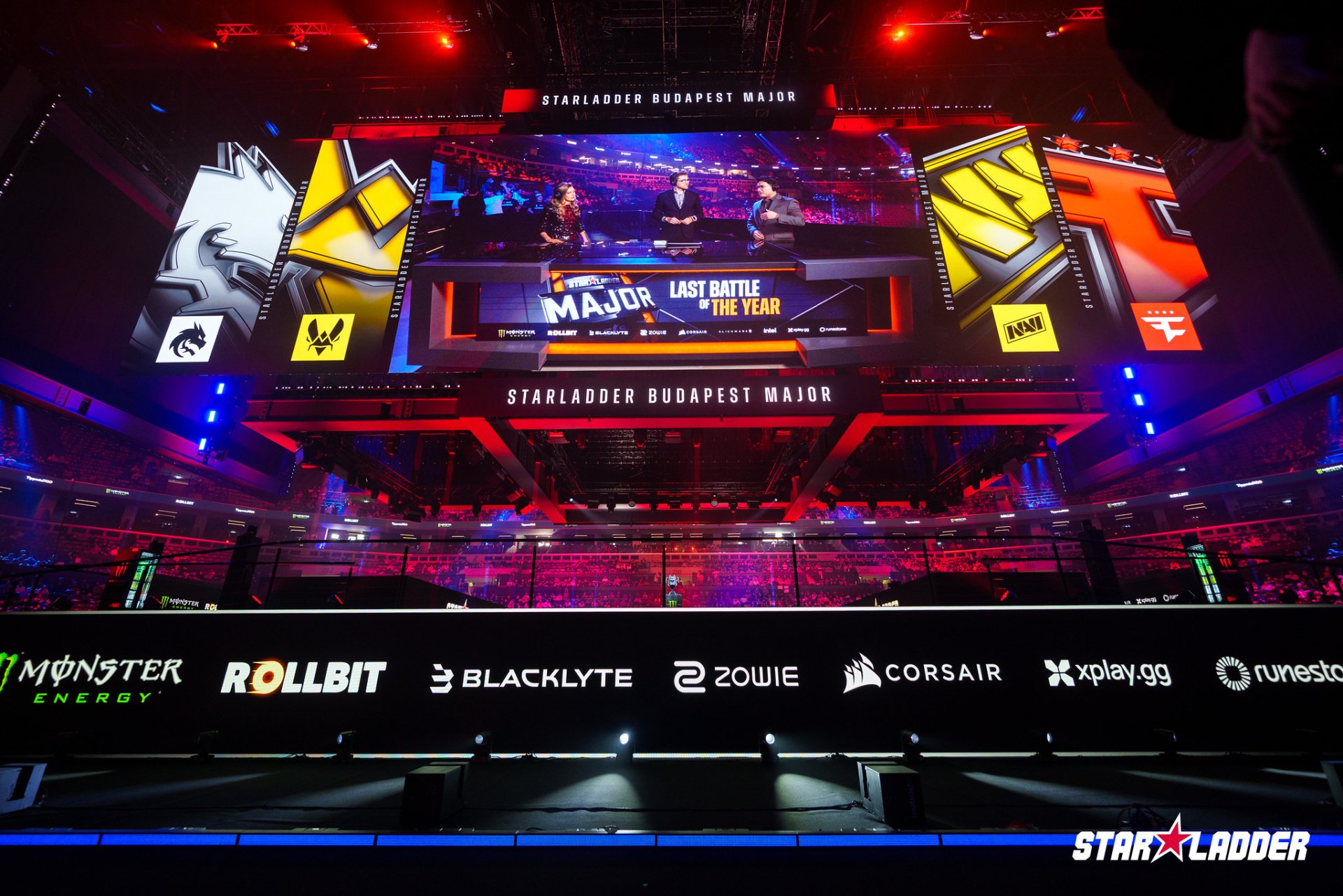
If you want to minimize the risk of encountering a fixed match, the simplest advice is to stick to major international tournaments.
First, the world's best teams compete there. Winning such a championship brings not only substantial prize money, but also prestige. The more successful the team, the higher the players' salaries, the more expensive the transfers, the more lucrative the sponsorship deals, and the higher the chances of joining a top-tier organization.
Simply put, a professional player on a world-class team has little reason to risk their entire career for the relatively small sum that could be made on 322. There is far more to lose: a spot on the roster, reputation, future contracts, and the opportunity to compete at the biggest tournaments.
Second, Tier-1 competitions are under the intense scrutiny of millions of viewers, analysts, tournament operators, and bookmakers. Any strange mistake instantly becomes a topic of discussion. Therefore, hiding a fixed match at this level is far more difficult.
Of course, this does not mean that fixed matches at Tier-1 tournaments are impossible. However, the likelihood of such a scenario is significantly lower than in lesser-known competitions.
Why is the Risk Higher in the Tier-2 and Tier-3 Scene?
When it comes to match-fixing in esports, regional tournaments and the Tier-2 or Tier-3 scene are discussed most often.
The reason is simple: much depends not only on the competition level, but also on the economics of a specific title.
For example, in South Korea, the professional League of Legends scene has existed for many years. Players represent major organizations, receive respectable salaries, and the market itself is well developed. In such an ecosystem, participating in match-fixing is simply unprofitable.
The situation can look entirely different in the Tier-3 Dota 2 scene in certain regions. Small prize pools, unstable payouts, lack of fixed salaries, and weak support from organizations create fertile ground for violations.
This does not mean that all obscure teams engage in 322. However, if you are choosing between a match of top teams at an international championship and an obscure online tournament, the latter objectively carries higher risks.
Therefore, before placing a bet, it is worth taking a few minutes to research the participants. If a team recently appeared on the professional scene, constantly changes its roster, or barely competes in major events, it is best to approach such matches with caution.
How to Spot 322 via Bookmaker Odds
If you ask experienced bettors how to identify a suspicious match, many will look at line movement first.
Imagine a situation: in the morning, the odds for a team to win were 2.30, but a few hours later, without any breaking news, they dropped to 1.60.
By itself, this does not automatically mean you are looking at a fixed match. Odds can shift for various reasons: roster announcements, news about players' health, or a large volume of bets from regular users.
However, if the line shifts drastically without obvious reasons, that is cause for concern. Sometimes such movements happen because large sums of money are heavily placed on a single outcome.
That is why odds movement is considered one of the primary signs of a potential fixed match. It is not proof of 322, but a critical signal that shouldn't be ignored.
Not All Tournaments are Equally Safe
Sometimes, it is not the team that raises questions, but the tournament itself.
In esports, small online tournaments that almost nobody has heard of appear regularly. They feature unknown organizers, small prize pools, and minimal viewer attention.
It is around such competitions that talks of potential match-fixing most frequently arise.
Online, you can find opinions that certain tournaments are created solely for betting purposes. Such allegations are rarely proven, so they should be taken with a grain of salt. However, one rule remains relevant: the less transparent a tournament is and the less information available about its organizers, the more careful you should be when placing bets.
Events run by major organizers like ESL or PGL look entirely different. They have built their reputations over years and are invested in fair competition, making the likelihood of encountering serious violations significantly lower.
Spot-Fixing: A New Form of Match-Fixing
Many imagine a fixed match very simply: a team intentionally throws a map or the entire series.
In practice, this happens less frequently today.
More and more often, we see so-called spot-fixing—an attempt to influence not the final outcome of the match, but only an individual in-game event that also accepts bets.
For example:
losing First Blood in Dota 2;
intentionally throwing the first round in CS2;
making an unusual weapon purchase;
deliberately making a mistake at the very start of a map.
To an average viewer, such an episode might look like an accident. But if there are too many of these moments, questions arise.
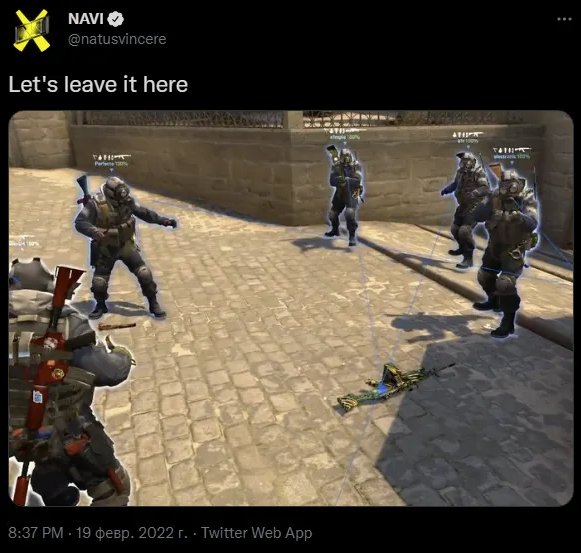
A good example is the story involving Ilya "Perfecto" Zalutskiy. During a major CS2 tournament, the Russian player unexpectedly purchased an M249 light machine gun—a weapon virtually never used in the pro scene due to its high cost and low effectiveness compared to standard rifles.
This incident immediately caught the attention of viewers and analysts. Speculation surfaced on social media that the unusual buy might have been tied to prop bets on specific in-game events. No direct evidence of match-fixing was ever produced despite heated discussions, the appearance of special bets at certain bookmakers, and numerous community theories. Perfecto himself denied all allegations.
This story clearly illustrates how the esports betting market has evolved. Today, suspicions can be raised not only by a lost match, but also by a single unusual in-game play. However, it is important to remember: a strange decision in itself is not proof of 322.
Conclusion
It is impossible to completely eliminate the risk of encountering a fixed match. However, understanding how to spot 322 and what to look out for will significantly lower your chances of making a mistake.
Before placing a bet, it is helpful to keep a few simple rules in mind:
stick to major international tournaments;
be cautious with obscure online competitions;
research the reputation of teams and tournament operators;
monitor sharp shifts in odds;
do not draw conclusions based solely on a single strange play.
The main thing is to maintain common sense. If several red flags align at once, it is better to skip the bet and wait for a clearer match. There will always be plenty of opportunities to make a good bet in esports, and unnecessary risk is rarely justified.
FAQ
What is 322 in esports?
322 is slang for a fixed match. The term originated from a famous Dota 2 incident where a player bet against his own team to potentially win $322.
How can you tell if a match might be fixed?
A single sign is not enough. Usually, you should consider several factors at once: the tournament tier, team reputations, sharp odds shifts, suspicious in-game episodes, and operator transparency.
Are there fixed matches at Tier-1 tournaments?
Yes, the possibility cannot be ruled out completely. However, at the largest international tournaments, the probability of 322 is significantly lower thanks to high player salaries, reputational risks, and heightened scrutiny from organizers, fans, and bookmakers.
Why do bookmakers change odds?
Most often, it is tied to roster news, injuries, changes in team form, or a large volume of bets on a specific outcome. However, a sharp line movement without an obvious reason can be one of the indicators of a suspicious match.
What is spot-fixing?
Spot-fixing is an attempt to influence a specific in-game event rather than the overall match outcome. For example, losing First Blood in Dota 2 or deliberately throwing the first round in CS2.
Is it worth betting on obscure tournaments?
If you are a beginner, it is better to focus on major international championships. On obscure online tournaments, finding reliable information about teams and organizers is harder, and the risks of encountering suspicious matches are objectively higher.
Artificial Intelligence vs. Expert Opinion: Can a Neural Network Completely Replace an Esports Analyst?
Machine learning algorithms process gigabytes of tournament data in seconds, finding hidden patterns and building mathematical models with incredible accuracy. But can neural networks completely write off the human factor, intuition, understanding of players' psychological state, and insider knowledge? We break down the showdown between AI and expert analysis in esports.
Bankroll Management in Esports: How Not to Lose Everything at CS2, LoL, and Overwatch 2 Tournaments
Major tournaments like the CS2 Major or LoL Worlds are the biggest temptation for an esports analyst. A constant flow of matches, excitement, and sharp odds shifts often lead to a wiped-out deposit in a single weekend. We break down the mathematics of bankroll management and adapting bet sizes to three key disciplines.
Anatomy of Non-Gaming Risks in Esports: How Jet Lag, Flights, Climate, and Schedules Break Favorites in CS2, LoL, and Overwatch 2
An esports match result depends only 60% on map pool or draft quality. The remaining 40% is the hidden anatomy of a tournament: multi-hour airport layovers, drastic climate changes, disrupted sleep, night matches, and equipment issues. We break down how physiology, logistics, and psychology affect rosters in CS2, LoL, and Overwatch 2, and how to find mathematical value where others see mere statistical randomness.