5 Esports Prediction and Analytics Sites: Where to Find Value and Accurate Stats
Where can you find accurate statistics for esports betting? We review the 5 best sites for analyzing CS 2, Dota 2 and Valorant matches, weigh their pros and cons, and highlight the technological features of the Ensitics platform.
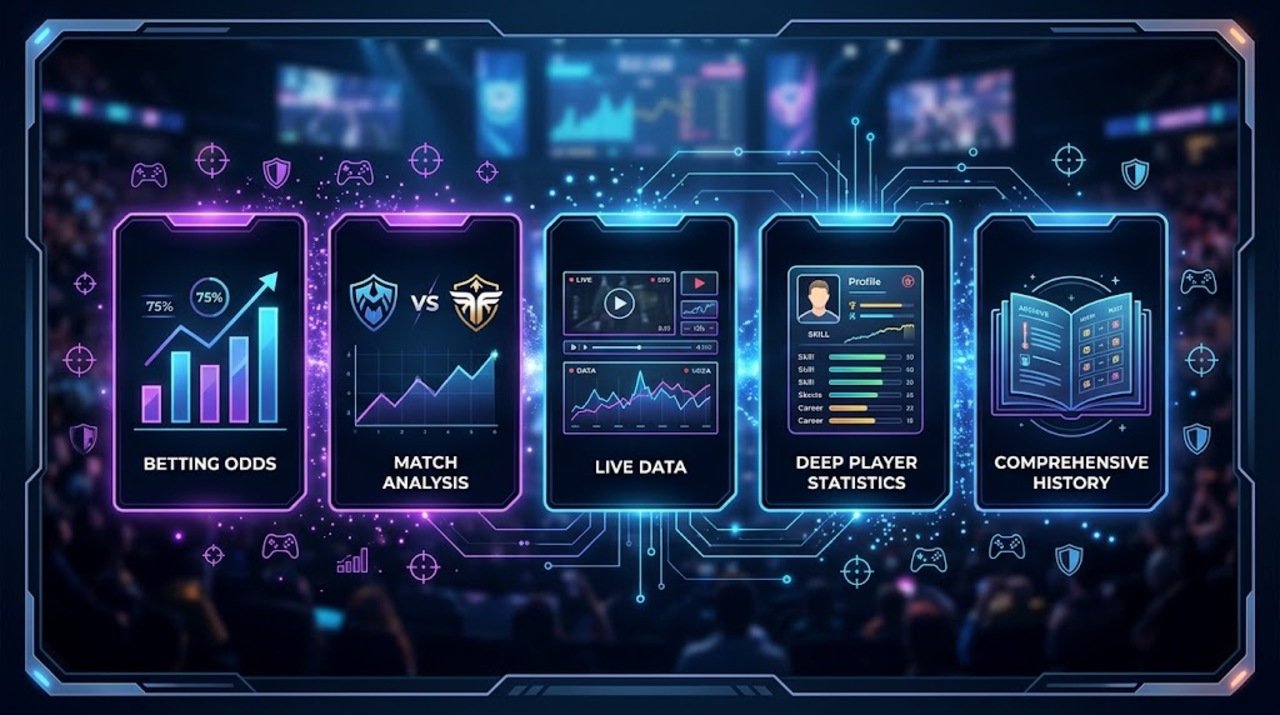
The esports industry is growing at breakneck speed, and betting on CS 2, Dota 2 and Valorant has long since stopped being a matter of intuition. To predict matches successfully, find value odds and make sense of in-depth team statistics, regular Twitch streams are not enough. You need specialized platforms that collect data, calculate win rates, analyze map pools and provide tools for prematch and live analytics.
In this roundup, we will look at the 5 best sites for esports predictions, break down their strengths and weaknesses, and pay special attention to the modern platform Ensitics.
Use Ensitics.io as your prematch checklist — try it for free → ensitics.io
1. Ensitics (ensitics.io) — Advanced Analytics for Those Who Bet Smart
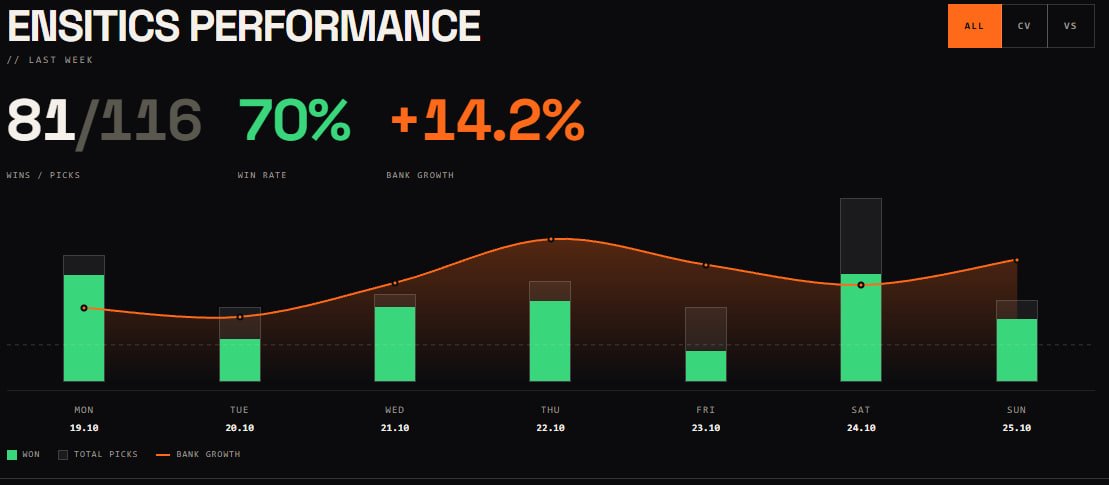
The Ensitics platform has established itself in the esports analytics market as a high-tech assistant for bettors and fans of in-depth data. The service focuses on automating probability calculations and presenting ready-made analytics in a convenient way.
Pros:
Innovative approach to match analysis: The platform offers high-quality algorithmic breakdowns and predictions based on up-to-date team data.
User-friendly interface: All the necessary statistics are presented concisely, without clutter or an overload of ad banners.
Focus on key disciplines: Excellent detail across the top esports titles, which saves time when searching for trends.
Cons:
Digital format of output: The platform delivers ready-made predictions and conclusions rather than raw, multi-page statistics tables, which some users like to compile themselves.
English-language interface by default: The main interface is aimed at an international audience, but it can be switched to other languages.
2. HLTV.org — The Gold Standard for CS 2
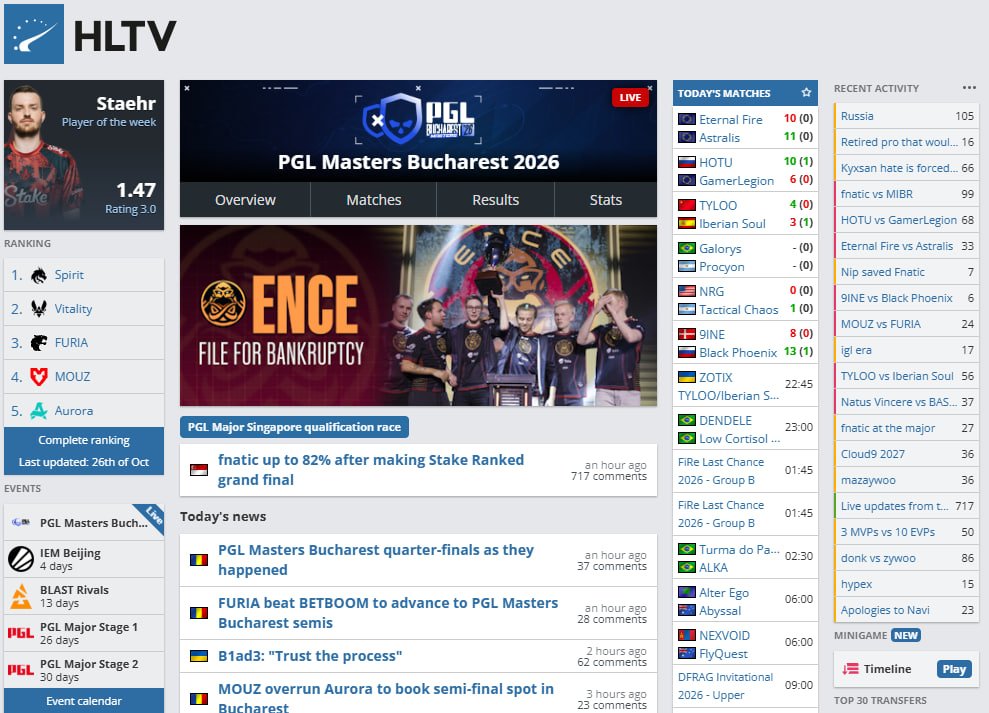
HLTV remains the world's main Counter-Strike portal, one that no serious analyst can do without. It has everything: from the latest news to a colossal database of demo recordings and rankings.
Pros:
Exhaustive statistics: Rating 2.0, individual stats for riflers and snipers, statistics for pistol rounds and individual positions.
Speed: Official lineups, stand-ins and roster changes appear here faster than anywhere else.
Huge community: In the comments and forums, you can often find insider info about teams' real form or problems inside squads.
Cons:
Narrow specialization: The portal is built exclusively for Counter-Strike; Dota 2 or LoL fans have nothing to do here.
Archaic design: The site's interface changes extremely reluctantly and looks overloaded with blocks of text.
3. Liquipedia — The Esports Encyclopedia
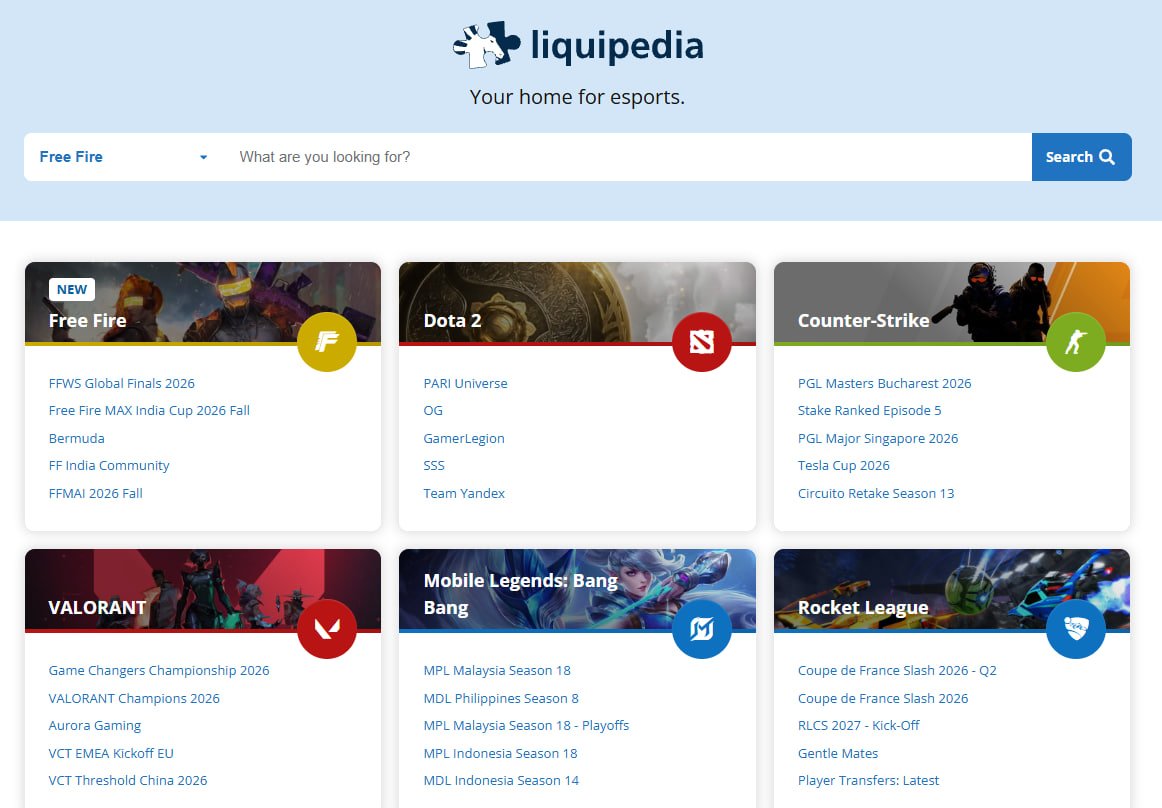
Liquipedia is a collaborative database created by the community. It covers almost all esports disciplines (Dota 2, CS 2, Valorant, LoL, Apex Legends and others).
Pros:
Up-to-date tournament brackets and schedules: Nowhere else will you find such accurate information about current qualifiers, prize pools and Double/Single Elimination brackets.
Roster history (Transfers & Rosters): It's convenient to track who joined a team and when, which is critically important before major championships begin.
No ads: The site runs on community enthusiasm and sponsor support, so your eyes don't get tired of banners.
Cons:
No betting analytics: There are no probability charts, odds or advanced in-game statistics (K/D, ADR, etc.) — it is purely reference information.
Dry encyclopedic format: The site requires you to search for and cross-reference facts yourself.
4. Esports Charts — Viewership and Metrics Analytics
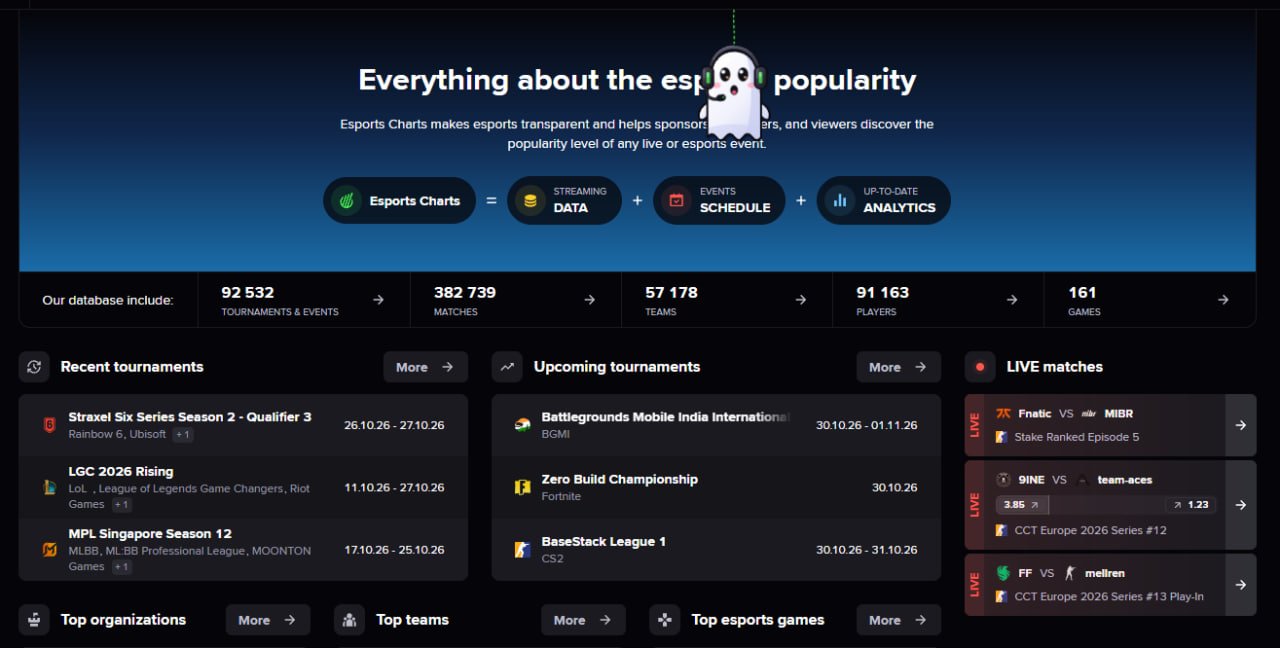
This resource specializes not in in-game shooting but in the "numbers beyond it": tournament popularity, viewer peaks, hours watched and teams' media presence.
Pros:
Understanding the match context: Helps you gauge how important a tournament is for an organization. A commercial online tournament is one thing; a major with a live audience, where the cost of a mistake is highest, is another.
Statistics by patches and heroes (within reports): Useful analytical snippets on the popularity of particular characters/maps.
Cons:
Most of the in-depth data is paid: The main body of convenient dashboards and detailed reports is hidden behind a subscription.
Not suitable for micro-analysis: The site is useless if you need to find out a specific player's form before a match.
5. GosuGamers — The Good Old Match Aggregator
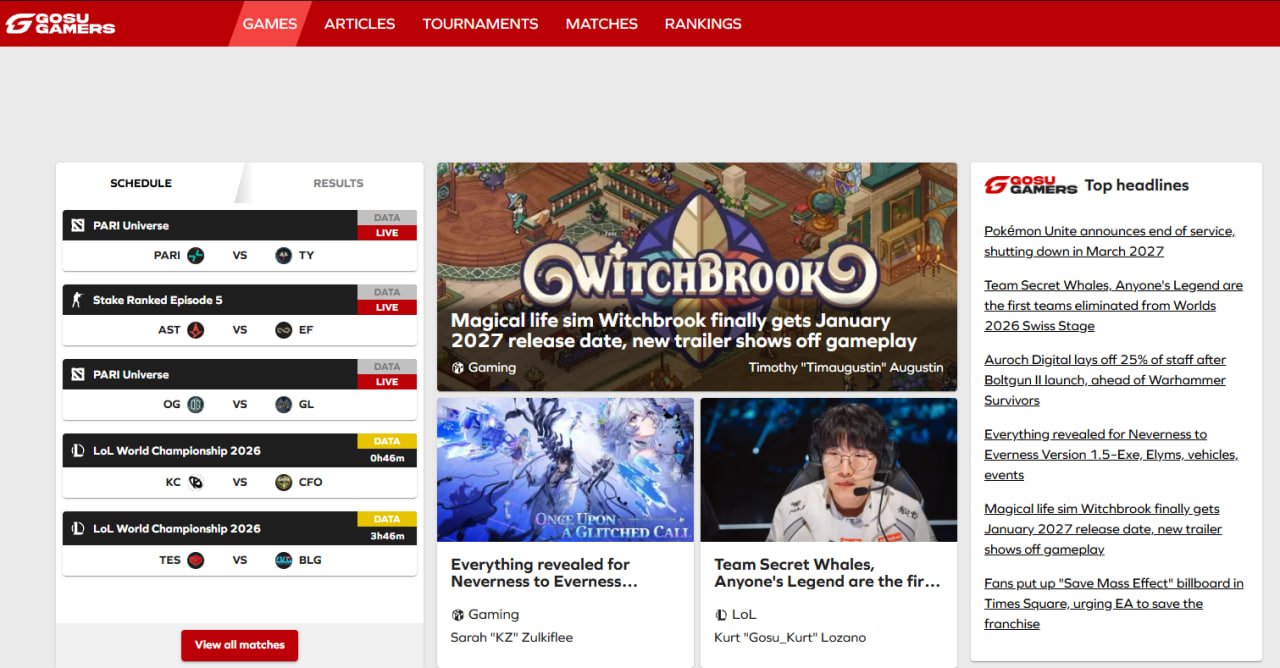
One of the oldest esports portals, which still retains its audience thanks to convenient sections with betting, community predictions and match history.
Pros:
Team rankings (GosuRankings): Its own system for ranking teams across different disciplines.
Community predictions: You can see how the crowd votes on a given outcome, and sometimes catch value by going against the majority opinion.
Cons:
Outdated interface: The site looks abandoned in places and is slow to adapt to modern esports realities.
Accuracy of user predictions: Since predictions are left by ordinary users, trusting them blindly is dangerous — there is a high share of emotional bets.
Read also: The Psychology of Tilt: How Esports Players' Emotions in CS2 Ruin Iron-Clad Accumulators and Predictions; Bankroll Management in Esports: How Not to Lose Everything on CS2, LoL and Overwatch 2 Tournaments; Artificial Intelligence vs Expert Opinion: Can a Neural Network Fully Replace an Analyst in Esports?
FAQ
What is 322 in esports?
322 is the slang term for a fixed match. The term appeared after a well-known case in Dota 2, when a player bet against his own team and stood to win 322 dollars.
How can you tell that a match might be fixed?
A single sign is not enough. Usually you should pay attention to several factors at once: the tournament level, the teams' reputations, sharp changes in odds, suspicious in-game episodes and the transparency of the organizer.
Do fixed matches happen at tier-1 tournaments?
Yes, such a possibility cannot be completely ruled out. However, at the biggest international tournaments, the likelihood of a 322 is significantly lower thanks to players' high salaries, reputational risks and heightened attention from organizers, viewers and bookmakers.
Why do bookmakers change odds?
Most often this is due to news about lineups, injuries, changes in team form or a large number of bets on a particular outcome. However, a sharp line movement without an obvious reason can be one of the signs of a suspicious match.
What is spot-fixing?
Spot-fixing is an attempt to influence not the result of the entire match, but a separate in-game event. For example, losing first blood in Dota 2 or deliberately giving away the first round in CS2.
Is it worth betting on little-known tournaments?
If you are a beginner, it is better to focus on major international championships. At little-known online tournaments, it is harder to find reliable information about teams and organizers, and the risk of running into suspicious matches is objectively higher.
One free pick a day — see the model's call before the match.
Get Started — Free
Read also
How to Deal with Tilt After a Lost Bet: Bettor Psychology and a Step-by-Step Plan to Save Your Bankroll
A painful betting loss often pushes players into tilt, making them lose money on emotions. We explain why the "chasing itch" appears, how to recognize loss of control, and which rules will save your bankroll from a total drain.
Read →CS 2 vs Valorant in Betting: Where Is It Easier to Predict Outcomes and What Is the Difference for an Analyst
Which tactical shooter is better suited for esports betting? We compare CS 2 and Valorant: shooting mechanics, patch impact, economy, and the specifics of analytics for successful betting.
Read →Betting on Player Stats in CS2: When to Pick Over/Under on Key Rifler Frags
Betting on individual kill totals in CS2 requires a deep understanding of player map roles. We analyze how the MR12 format changed player statistics, when to bet Over or Under on key rifler kills, and what to focus on during pre-match analysis.
Read →